

I don’t know about you, but I’m a little rusty when it comes to Shakespeare.
Ol’ Willie Shakes and I have a history. We had some issues over “Macbeth” back in college (a long and hilarious story for another time), but I relied on his Sonnet 116 to propose to my Darling Beloved. A few years after our nuptials, we visited Stratford-upon-Avon and saw a production of “As You Like It” on the main stage at the Royal Shakespeare Theatre. I have serious Shakespeare bonafides.
But that was a long, long time ago in a galaxy far, far away.
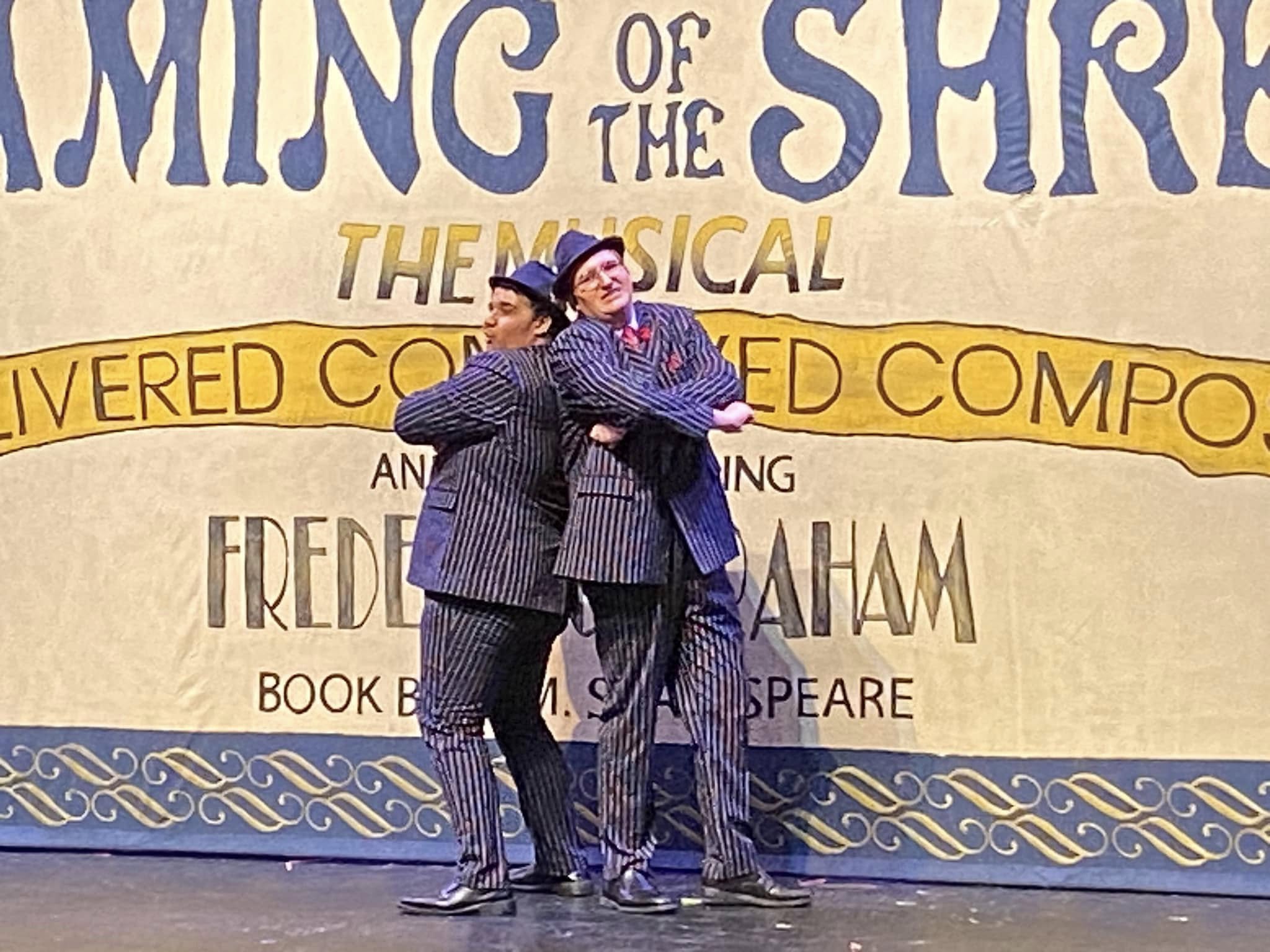
The closest I’ve come to Shakespeare recently was the Gwinnett School of the Arts staging of Cole Porter’s “Kiss Me Kate” back in April 2024. It’s loosely based on Shakespeare’s “Taming of the Shrew.” Our youngest, Carlton, played one of the two bumbling gangsters who performed a madcap duet titled, “Brush Up Your Shakespeare.” (If you want to see that triumphant and hilarious turn by Carlton and his classmate Drew Olds, check it out on Carlton’s Instagram.)
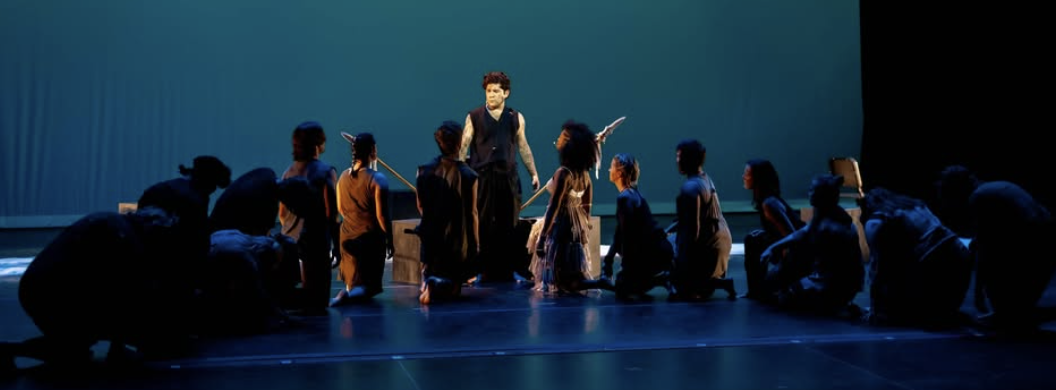
My Shakespeare definitely needed brushing up, so last Saturday I jumped at the chance to go with my 17-year-old theater kid to see his good friend and fellow thespian Erin Moore in a production of “Hamlet” in Marietta, a part of Atlanta I frequent almost as often as Stratford-upon-Avon on account of the impassable and impossible traffic on the top end of I-285. (To be fair, it was only 45 minutes away with lighter-than-normal Saturday morning traffic.)
Carlton would traverse many more miles if necessary to see Erin perform, and I will do anything to spend quality one-on-one time with Carlton. The father-son time attracted me to the opportunity, but the incredible production of “Hamlet” proved to be the icing on the cake.
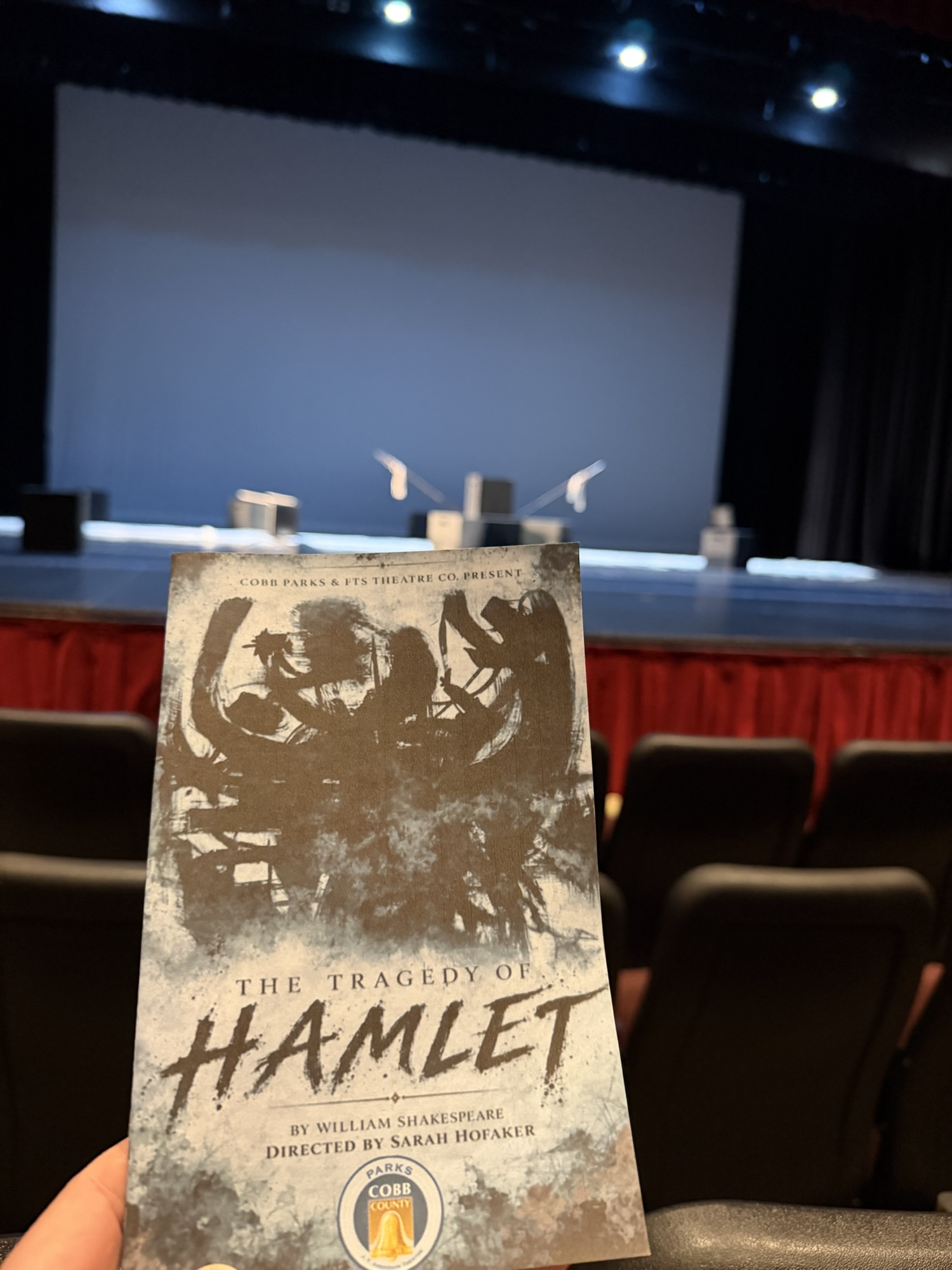


The brand new Atlanta-based FTS Theatre Company staged the show under the creative and committed directorial wizardry of the talented Sarah Hofaker. I thoroughly enjoyed her take on this classic, and I’m eager to see what project she applies her unique artistic vision to next.
It’s admittedly been a few years since I took in a work of Shakespeare, and thanks to Carlton’s opportunities the past seven or eight years, I’ve mostly seen musicals.
“Hamlet” is not that. The biggest clue is that “Hamlet” is categorized as a “tragedy.” That means a lot of darkness, maybe some ghosts, definitely murder, and probably some dismemberment thrown in for kicks. The only laughs are the portrayal of trauma-informed mental illness, which, probably, shouldn’t be funny at all.
I had seen “Hamlet” before, many years ago. I think it was during college when I was at Troy University and routinely availed myself of shows at the Alabama Shakespeare Festival in Montgomery. I know, I know, people snicker when you say “Alabama” and “Shakespeare” in the same sentence, but I’m telling you, it’s legit. The shows are amazing.
The FTS “Hamlet” provided both the inspiration and intrigue to reignite my love of 16th and 17th language. It took a minute to adjust, but once I clicked in and focused, I followed along even with the antiquated metaphors and SAT words.






I shouldn’t have been, but I was caught off guard by how many famous quotes come from “Hamlet.” Yes, there’s the obvious “To be, or not to be, that is the question,” but I discovered a number of my favorite aphorisms come from this work.
Here’s a quick rundown:
“Brevity is the soul of wit.” (Act 2, Scene 2) – Polonius says that a good speech should be short. I say this all the time. Probably weekly. All too often I fail to follow this wise counsel, but it doesn’t stop me from saying it. A lot.
“Though this be madness, yet there is method in ‘t.” (Act 2, Scene 2) – Polonius notices a clever pattern in what Hamlet says. This is my other frequent unknowing “Hamlet” quotation, though somewhat misaligned as “There is a method to my madness.” There’s a good chance I say this so much because I have to excuse or at least explain my eccentricities to my Darling Beloved. And also because I am probably quite mad.
“The lady doth protest too much, methinks.” (Act 3, Scene 2) – Queen Gertrude comments on a character in a play who makes too many promises of innocence. This is my third most often quoted or misquoted line. I tend to make it gender neutral as an all-purpose witty retort when I’m feeling clever. Guess who doesn’t think this line is clever when used in our word play/verbal combat? That’s right. My Darling Beloved. It’s the method to my… well, you get it.
“Something is rotten in the state of Denmark.” (Act 1, Scene 4) – Marcellus warns that something bad or corrupt is happening. I say this one, too, but just not as often. Anyone paying attention these days would have ample opportunities to use it when referring to our “current world situation.”
“To thine own self be true.” (Act 1, Scene 3) – Polonius gives wise parting advice to his son Laertes. I interchange this quotation with one from my now retired former boss and mentor, Ben McDade: “Let your conscience be your guide.” I rely on it when I’m being old and mentory with the young folks in my life. I don’t like to say it to my kids, though. I want them to be true to “what I told you to do” and not “thine own self.”
“Alas, poor Yorick! I knew him, Horatio.” (Act 5, Scene 1) – Hamlet holds an old friend’s skull and thinks about life and death. Yeah, I have never said this, I don’t think, and certainly not while holding a skull. I don’t have reason to encounter many skulls, real or the ones that have been for sale as Halloween decorations at Party City and even Home Depot since July. This line is also often misquoted as “Alas, poor Yorick! I knew him well.” Come to think of it, most of these lines get misquoted…
“To be, or not to be, that is the question.” (Act 3, Scene 1) – Hamlet wonders about the pain of life versus the unknown of death. As stated, this is the most famous. I have said it a time or two, but it’s not in my standard repertoire. It’s too obvious. I like my humor to be obscure and difficult to grasp. In other words, not humorous at all. That’s when I’m the most hilarious, as faithful readers of New South Essays and my coworkers can attest.
There are a lot of Lance-isms that I have appropriated from Shakespeare. I am aware that there are theories that even Shakespeare appropriated them from someone else, but let’s just agree that imitation is the sincerest form of flattery and skip the royalties.
Beyond the rediscovery of all the quotable lines, I was touched by the performances of Erin and her castmates in this staging of “Hamlet.” Now that I’ve brushed up my Shakespeare, it’s time I try that Sonnet 116 on my Darling Beloved again.
It’s like Gangsters 1 and 2 said: “Brush up your Shakespeare, start quoting him now. Brush up your Shakespeare, and the women you will wow.”
Carla, prepare to be wowed… or at least mildly annoyed.

