
Representations of fatherhood abound in popular culture.
From Goofball Dad to All-Powerful Patriarch, Nerdy Science Dad to Rugged Outdoorsman Dad and Cool Dad to Uptight Military Dad, the way fathers are depicted can easily devolve into cliche.
Of all the father archetypes, I identify most closely with Martyr Dad. That’s my term for the long-suffering and put-upon father who always puts his needs and wants second to his family and loved ones.
I identified with Martyr Dad only recently, and I have been reluctant to admit how neatly I fit into that category. Evidence has been mounting for some time.
Back in the mid 2000s, I sat in the breakroom at work enjoying a peanut butter and jelly sandwich, a tried-and-true lunch staple from my childhood. I was only a few bites in when my co-worker, Amy, joined a group of us at the table.
“Awwww,” she said when she saw my PB and J. “You love your family.”
I was perplexed.
“You made your sandwich out of the butt ends of the bread,” she said.
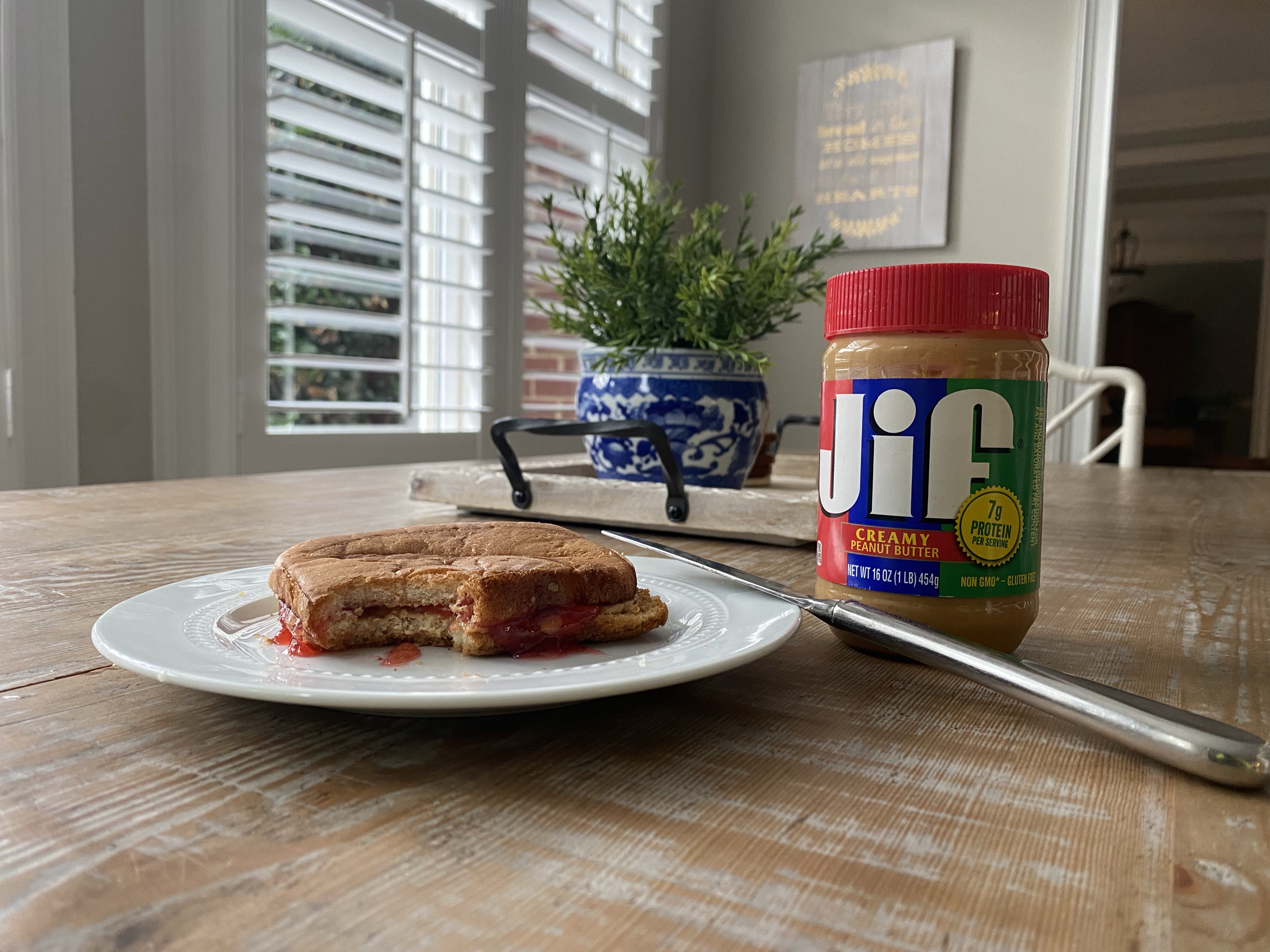
This encounter has stayed with me for nearly 20 years. Truth is, I didn’t feel I was making a sacrifice. Rather than love for Carla and my three boys, I chose the front and end piece of the loaf because I don’t like to waste anything, and I have little emotional attachment to food.
In fact, the decision rule I employ on packing a lunch for work each day is simple: which Rubbermaid container in the fridge contains leftovers closest to going bad. This has led to some borderline calls, but I am not above cutting the moldy part off a piece of fruit long after it has begun its journey toward fermentation.
I’m also not much help at picking restaurants when the family eats out. Again, it’s not that I am so generous as to defer to others’ wishes, I sincerely don’t care. I can find something on any menu that I will happily consume. My decision rule in those situations typically involves my calorie count for the day. I’m not making a sacrifice by allowing others to state their dining preference.
My martyr’s complex also shows up in household chores.
Take Winston, our miniature poodle, for instance. Please. Take Winston. Take him out. Occasionally. The poor guy is well-trained, so when I hit the door in the evening after work, our eyes meet, and he telepathically tells me, “Thank goodness you’re home. I’ve had to go for hours now and no one will take me out.”
Though I’m told other members of my family take him out all the time and I’m just not around to witness it, Winston and I have a special bond. I’m his bathroom buddy. If he ever needs to go out, all he needs to do is find me.
I readily take him out for three reasons: I am always cold in my house and will look for any reason to go outside to warm up, especially during the warmer months; I don’t want to clean up his “business” from a rug or mop up urine from our hardwood floor; and days full of meetings that require strategic hydration and caffeination to avoid the discomfort of delayed bathroom breaks makes me empathetic to Winston’s plight. All of these are selfish reasons.
This is where my martyr complex begins to show. I have developed a script with Winston that goes something like this: “Do you need to go out? I guess I’ll take you since these people don’t seem to care about you like I do.”
Did you catch it? “These people.” Closely related in my lexicon is the phrase, “You people.”
As I rapidly descend into crotchetiness, I have started announcing my service by no longer referring to my loving family by their names but the emotionally distancing and intentionally disparaging impersonal use of “people.”
It’s showing up in my speech with alarming frequency, and it’s a huge tell. My family responds with a collective eye roll when I resort to this rhetorical tactic.
“Since you people can’t be bothered, I’ll take the trash out,” I’ll say.
“I can’t seem to motivate these people to be ready on time,” has passed my lips a time or two.
“You people have issues with change in altitude because you don’t seem to be able to go up or down stairs. That’s the only explanation I can come up with for why there are two paint cans, a bunch of faux greenery and two picture frames at the top of the basement steps.”
Can you hear how annoying this is?
I used to be able to do these tiny chores without calling attention to them, but I am slipping. For some deep-seated reason I am increasingly needing to be affirmed in ways that never used to be an issue. What I don’t want to face is that I do these things, not for others, but because I have a psychological need for them to be done. I’m the one with the issue.
Truth is I like buying the family groceries each week. I don’t mind picking up my remaining non-driving child from various places because I can have conversations or listen to podcasts. I do the dishes because I don’t like anything in the sink or on the counter. I iron because it soothes my spirit to remove all the wrinkles from at least one aspect of my life. I take stuff up and down stairs because it helps me get my steps in.
I know on an intellectual level that I should not be congratulated for actions I want to do. I am just as selfish as the next person. It just so happens that what gives me satisfaction complements well what others in my household like to do. So why, then, on an emotional level, am I feeling the need to point out how much I’m “suffering” for my family? It really is ridiculous.
This Father’s Day, I’m starting a new tradition. Rather than basking in the adulation of my family in their cards, gifts and special meal menus, I’m going to make resolutions like New Year’s or Lent.
This year, I resolve to give up my martyr complex.
I am banishing “you people” from my vocabulary, and maybe by next Father’s Day I can transform from Martyr Dad into Goofball Dad.
 New South Essays