
My ambivalence toward college football has reached new heights.
I don’t even know how to calculate which week of the season it is, but in real time, they have been playing college football games since August 29, which was classified by ESPN as “Week 0.” (This nonsensical measurement of time is in the same category as “I’ll be ready in five minutes.”)
According to the college football schedule, we’re officially in week two. If I can’t even figure out what week of the season it is, imagine how conflicted I am about what constitutes a “college football player.” If you haven’t been following the news, LSU head coach and latest college football super villain Lane Kiffin this week backed off of his attempts to recruit to LSU two of his former Ole Miss players who had a year of eligibility left.
That’s not unusual in the era of the transfer portal, but what makes this situation novel is that both players went through the NFL draft, were not selected, and signed free agent contracts to play with the Cleveland Browns and New Orleans Saints respectively, though an argument can be made that Cleveland isn’t really a professional football team.
Both players were cut in preseason. The NCAA, SEC, CFP, UN, PDQ, ASAP, AFL-CIO and any other organization with a combination of letters you can imagine as its acronym has fought this development. A Louisiana judge ruled in favor of the players, and viola, we have our first distasteful dust-up of the season. Still, I watched the first half of LSU’s demolition of Clemson on Sept. 5.
During the insipid interview with the sideline reporter, Kiffin gloated about his big league and figuratively stuck out his tongue at the powers that be. He said, “Imagine if we had pro players.”
With the advent of the Name Image Likeness (NIL) deals for college players allowing them to receive money for their endorsements while still in college, the charade of college football being an amateur sport ended in 2021.
I understand the legal principle here that these athletes are already being paid, so what does it matter if they went to the NFL for a minute.
I guess there is no distinction legally, but it does further erode the myth of college sports being about the growth and development of “student athletes” as they earn a valuable college degree while learning important life skills like teamwork and goal setting.
When the SEC threatened to expel LSU from the conference, Kiffin backed off, but the whole affair was just the latest distasteful behavior from Kiffin. This same Lane Kiffin tested everyone’s patience last year when he awkwardly left his job at Ole Miss right as they were making the playoffs, abandoning the institution and the players he recruited at the very moment they had an opportunity to compete for a national championship.
Again with my ambivalence. That episode tainted the playoffs for me last year just as this professional-football-players-going-back-to-college deal is this year. Still, I watch.
I began to develop mixed feelings about college football as far back as 2013 when I listened to an episode of Malcom Gladwell’s popular and long-running podcast, Revisionist History, called “Burden of Proof.” Malcolm pointed out that research has revealed that football players suffer from the progressive brain disease Chronic Traumatic Encephalopathy (CTE) at higher levels because of the repeated head impacts they suffer. I didn’t feel good about seeing big hits on the field any more. Still, I watch.
A couple of years ago, at the encouragement of my friends Brian and Bob, I began a journey of “football support” and started following English Premier League football, better known as “soccer” in America. It fits nicely with my weekend schedule. I’m an early riser and because of the time difference in the UK, matches begin at the convenient time for me of 7:30 a.m. Eastern.
I can still recall with a chuckle the first time my eldest was home on a fall Saturday. He arose and came downstairs to watch the college football fare for the day only to discover I was watching Ipswich Town take on Newcastle instead of College Gameday. It blew his mind.
One of his favorite jokes now is to make up names for teams and ask me if I watched “Derbyton play Shackleswich” at 4:30 in the morning. (He does come up with some good ones that sound real.)
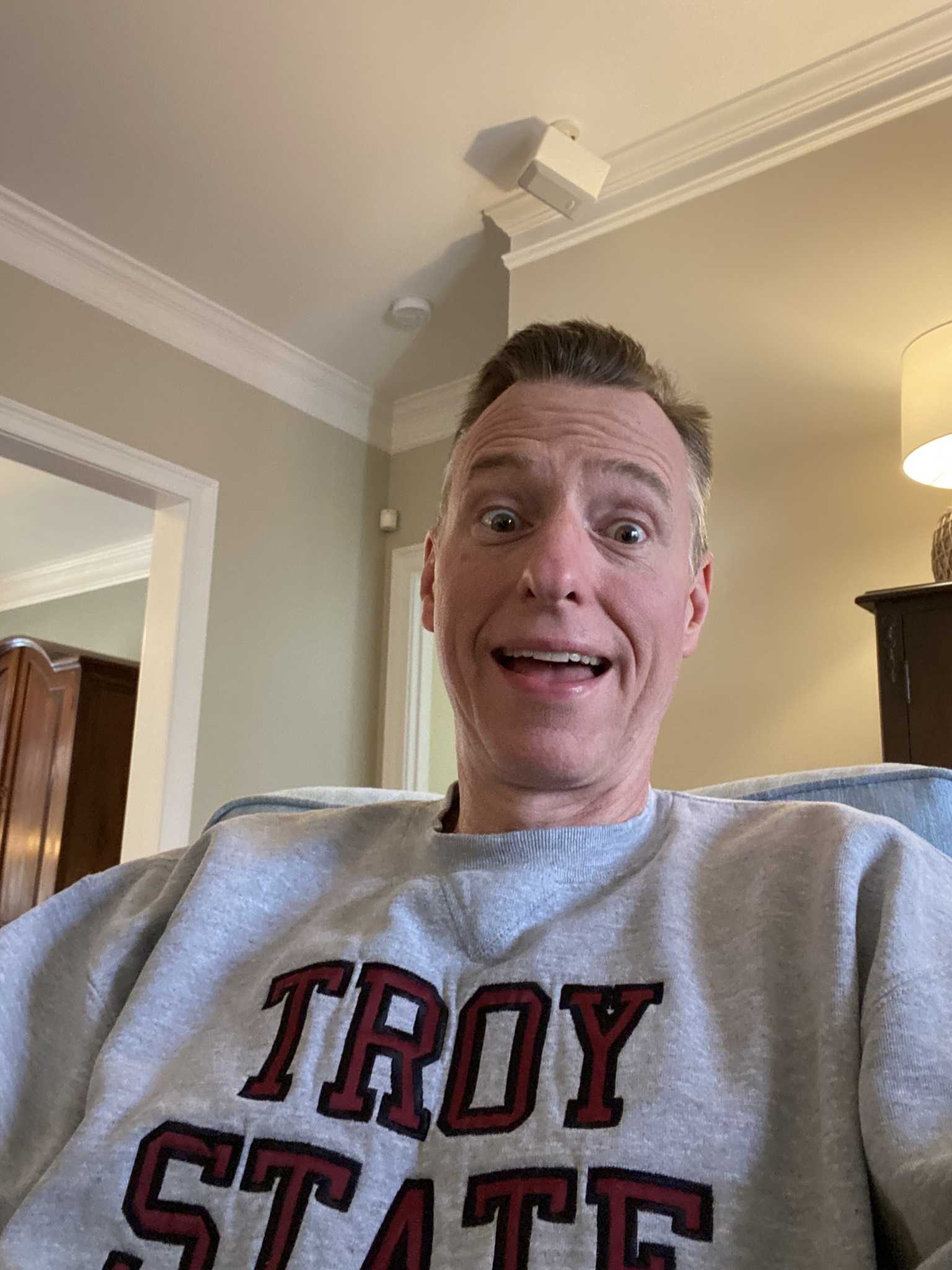
The thing about the Premier League’s schedule, though, is that you can easily switch over to college football for the afternoon and evening. Yes, there is some overlap, but most college football fans are already watching multiple games on multiple screens or doing picture-in-a-picture on their TV. I’ve now spent the better part of two years watching the Premier League on what would otherwise be Saturdays dedicated solely to college football. Still, I watch.
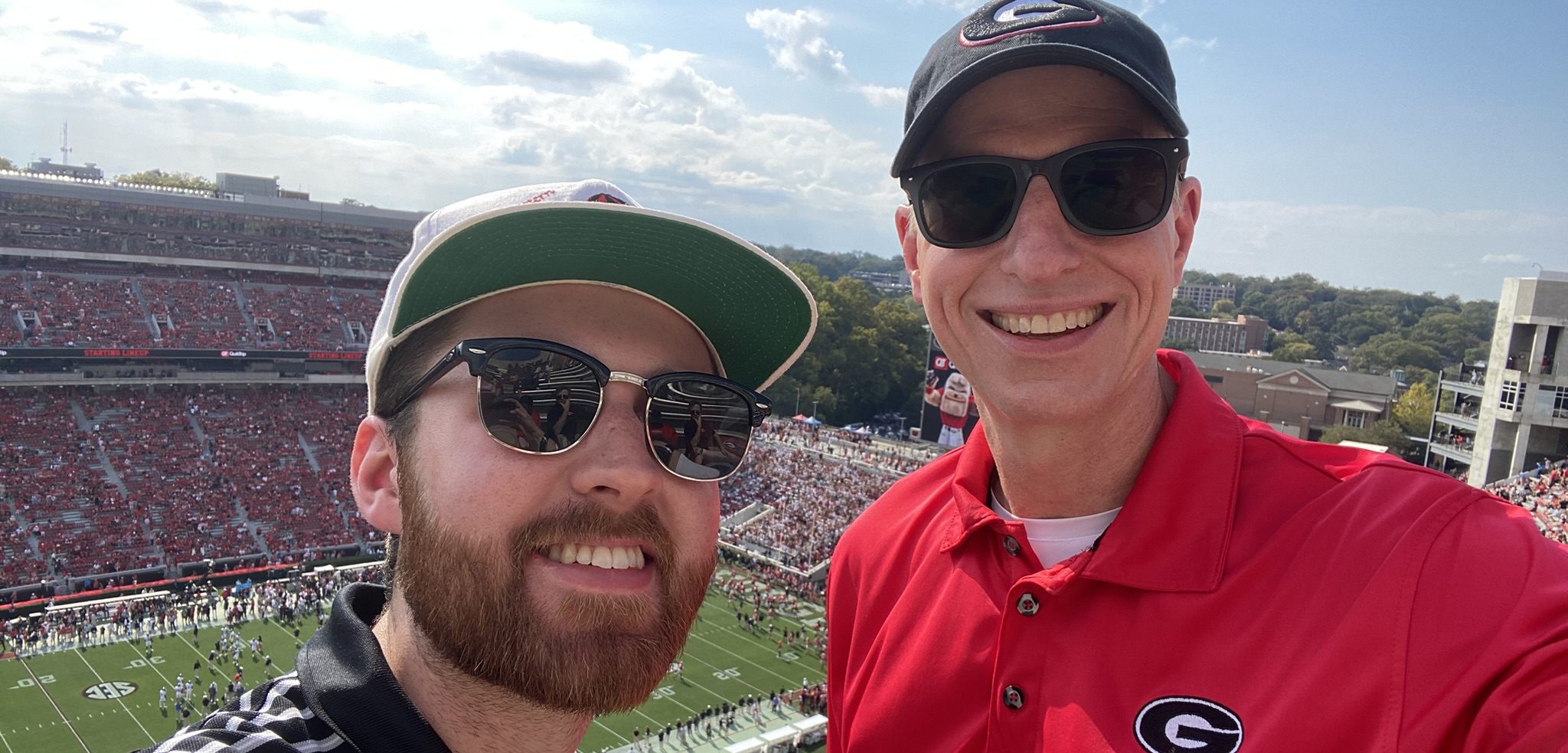
Seeing college football in person isn’t any better for me. The price of a ticket is astronomical, and I will not reveal how much I paid for a ticket to see Barron perform with the University of Georgia Redcoat Band on senior night in 2023 against Ole Miss at Sanford Stadium.
Yes, I heard my boy’s name called out on the PA system, saw his visage on the jumbotron and watched the Dawgs frolic to a 52-17 victory. That eased some of my financial pain. But you can see how what economists call “cognitive dissonance” crept in over my consumer decision. I vowed that was my last Georgia game to attend in person. Still, I watch.
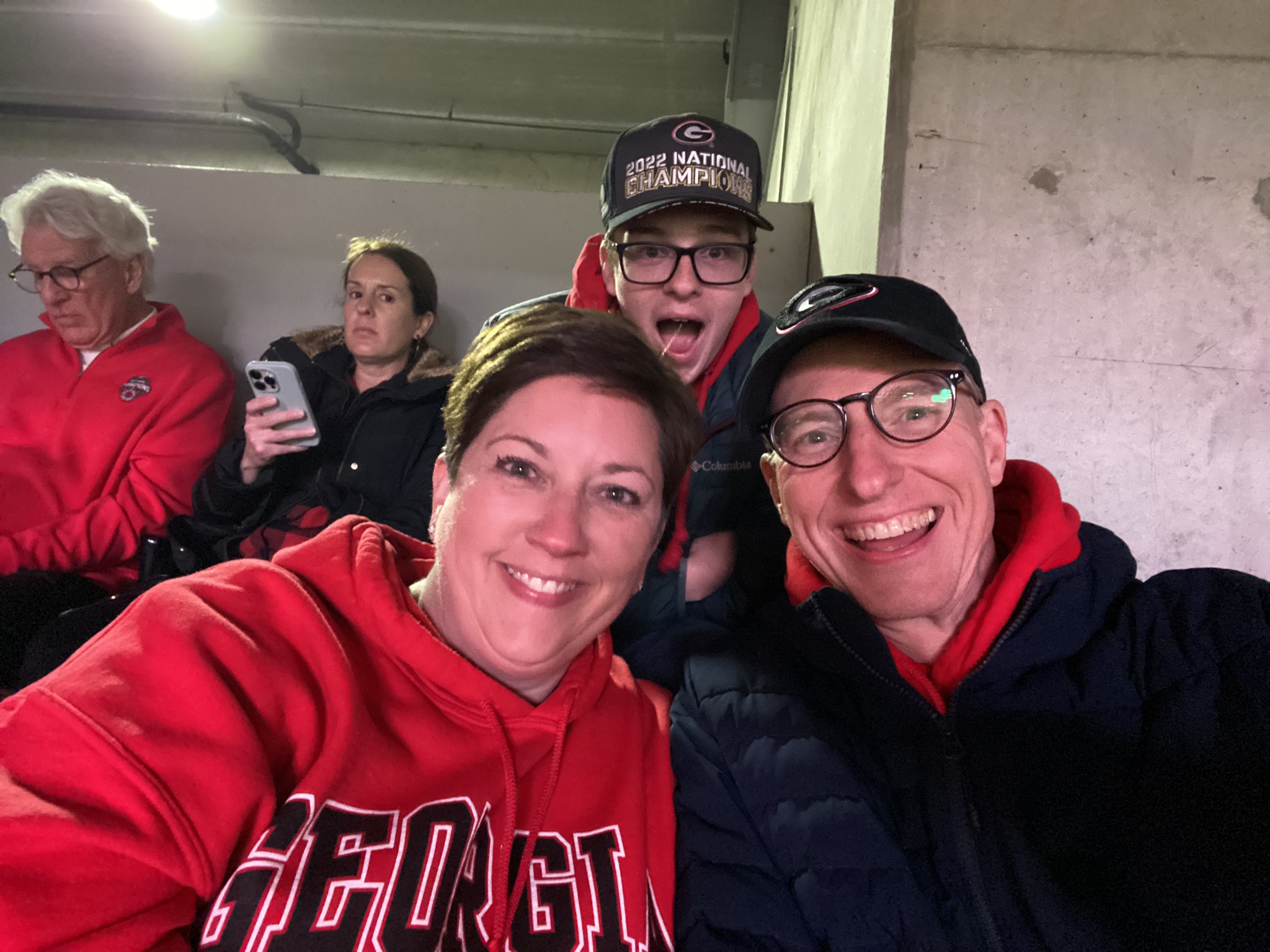
Fast forward a year and 18 days later when I found myself in the upper deck of Sanford Stadium, bundled up against the freezing temperatures to see Georgia take on in-state rival Georgia Tech. The grudge match took 8 overtimes to settle, and frostbite threatened all my appendages including my nose after nearly four and a half hours. Harris came down with pneumonia, though he still says it was worth it, and I vowed that it was my last Georgia game to attend in person. Still I watch.
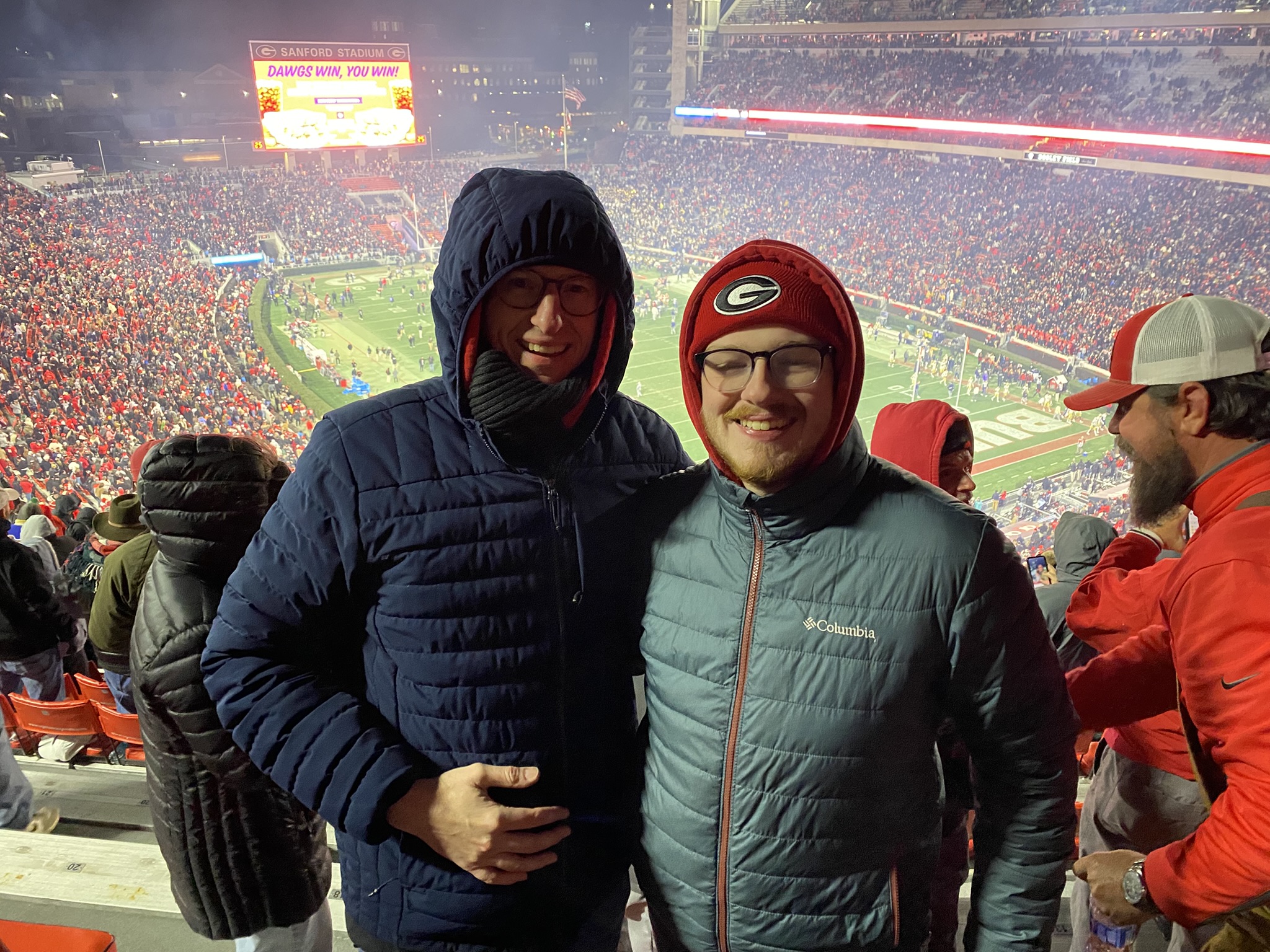
I’ll spare you the details, but the truth is I have attended at least one big time college football game a season dating back to the 20-teens, despite these misgivings.
So as I sat on my living room sofa last weekend watching nonsense on my phone while waiting for the 90-minute weather delay to lapse in the LSU-Clemson game, I really did wonder why I keep doing this.
With the benefit of a week of contemplation and personal reflection, I have settled on the answer: My boys.
The irony is that for years I spent fall Saturdays in front of the TV, and they would sneer in disgust at my watching “boring football.” Then, when they got to high school marching band, they became die hard football fanatics. They started watching with me, and before long, even when I didn’t care about the games, they had the TV on college football all day Saturday.
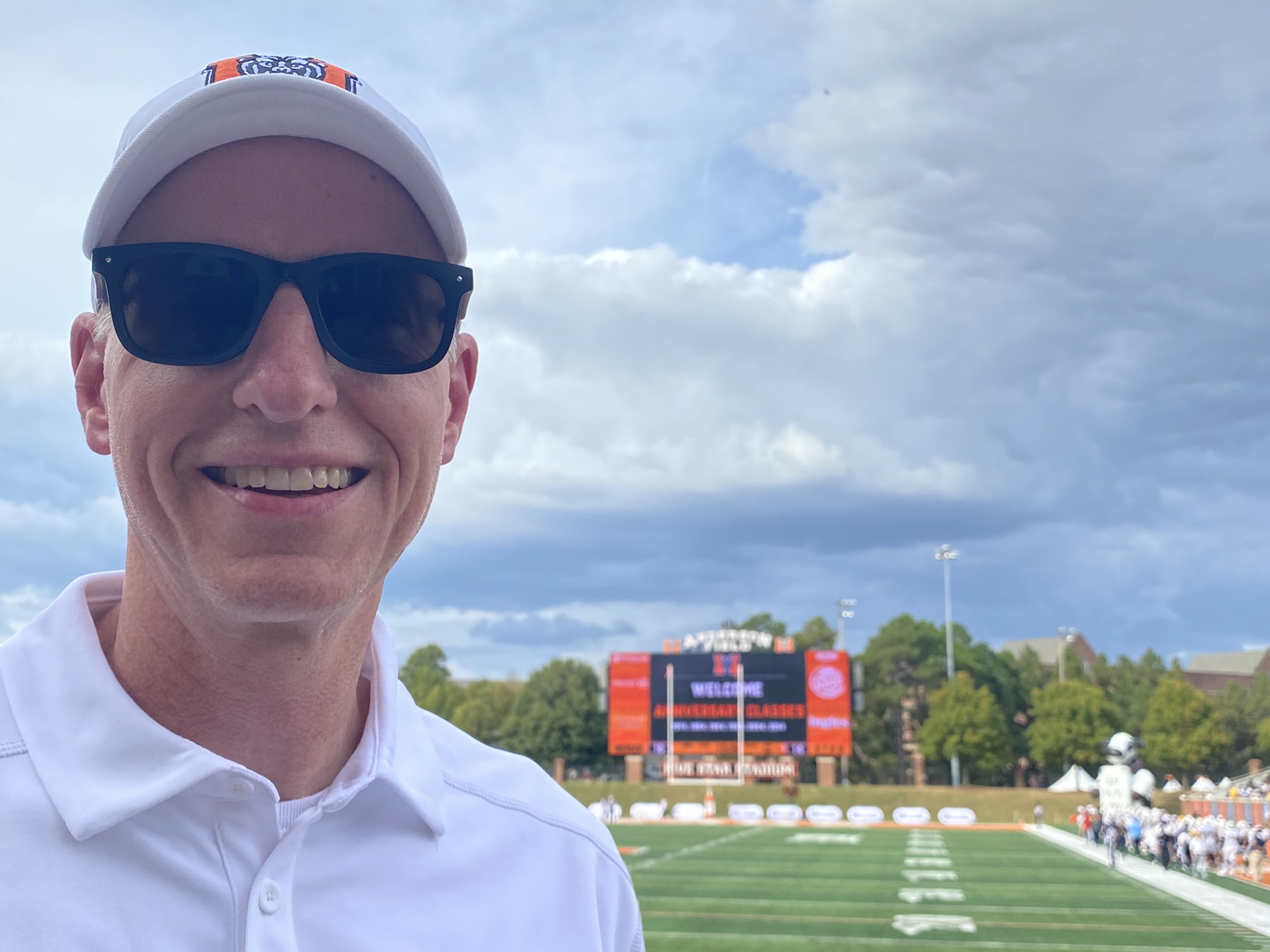
Now, if at least one of my older boys is home on a fall weekend, I can’t escape college football.
The shared experience with them pushes my doubts and mixed feelings to the sidelines. I find myself riding the roller coaster of emotions right along with them. I guess we could bond over other activities. It doesn’t have to be college football. But in this case, it is college football. That’s why, despite everything, I still watch.
By the looks of the painted faces and screaming fans filling the stadiums and the ever-growing TV ratings for college football games, I’m guessing there’s quite a few other people across this country who feel the same way.
I’m sure there will come a Rubicon that once crossed will cause me to give up on college football forever. But until then, I still watch.

